 English
 русский
 中文简体
中文简体 Español
 عربى
عربىVilla Big Handle Lock: The Hardware the Visitor Touches Before They Step Inside
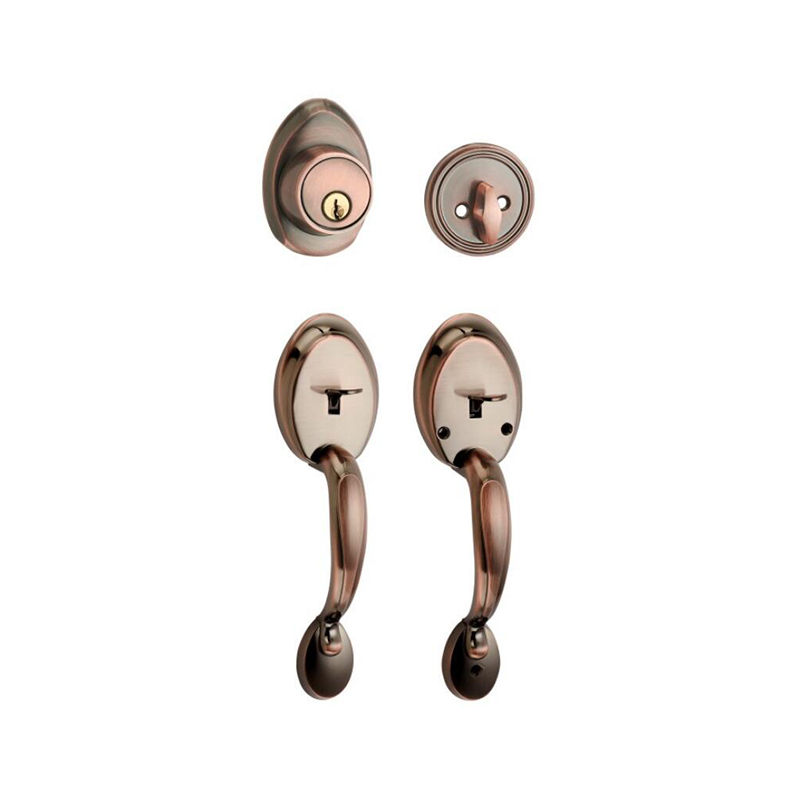
A villa entrance is wider and heavier than an interior door. The hardware on it is the first thing the visitor sees and the last thing they touch before entering. A villa big handle lock is built for that scale: a long lever on a heavy backplate, a keyed cylinder, and a latch that holds a door thick enough to stop a shoulder. It is not a bedroom knob scaled up. It is a different piece of hardware.
Why a Lever and Not a Knob
A knob needs a twist. A lever needs a push. The visitor who is carrying a bag, holding a child, or wearing gloves can push a lever down with an elbow. That is the reason the lever is standard on the villa entrance and the reason the handle is long and flat instead of round.
The lever mounts on a backplate that covers the door preparation and carries both the handle and the cylinder. The backplate spreads the load across the door face. A thin plate flexes under a hard pull. A thick plate stays flat.
The Cylinder Behind the Face
The keyed cylinder sits in the backplate or in the handle body, depending on the design. The key goes in from outside, the pins lift, the plug turns. A five-pin or six-pin cylinder with a solid brass plug resists picking and bumping better than the cheap version.
The interior side carries the thumb turn or the turn button. The resident locks the door from inside without the key. The emergency release on the outside opens the door with a key when the thumb turn is engaged.
The Latch and the Bolt Are Two Different Jobs
The latch holds the door closed and retracts with the handle. The deadbolt is the security and throws a solid bolt into the frame. The villa door usually carries both. Some units combine them in one body. Others mount the handle lock and the deadbolt as separate pieces on the same door.
The latch has the deadlocking plunger that stops the credit card slip. The deadbolt has the full throw. The villa big handle lock that includes both in one body simplifies the installation and the look on the door.
Here is what a villa big handle lock has to deliver:
- Long lever with a smooth, positive action
- Thick backplate that resists flex
- Five-pin or six-pin cylinder with a solid plug
- Deadlocking latch and a deadbolt option
- Thumb turn with emergency release
- Finish that holds through weather and hand oils
The Entrance That Gets Touched Every Day
The villa door, the apartment building entrance, and the high-end residential door all use the same class of hardware. The handle is the daily interface for every resident and every guest. It has to feel solid and turn smoothly through thousands of cycles.
The Lever That Starts to Sag
The lever sags because the return spring inside the chassis weakened. The backplate flexes because it was too thin. The cylinder sticks because the pins wore flat. The finish pits because the plating was too thin for the outdoor exposure. None of these are visible on the day of installation. They show up in the second year.
A villa big handle lock is the hardware the visitor touches first. The lever has to feel solid. The cylinder has to turn. The lock has to hold.

Copyright © 2026 by Wenzhou Boluosi Hardware Co., Ltd. Rights Reserved.
