 English
 русский
 中文简体
 Español
 عربى
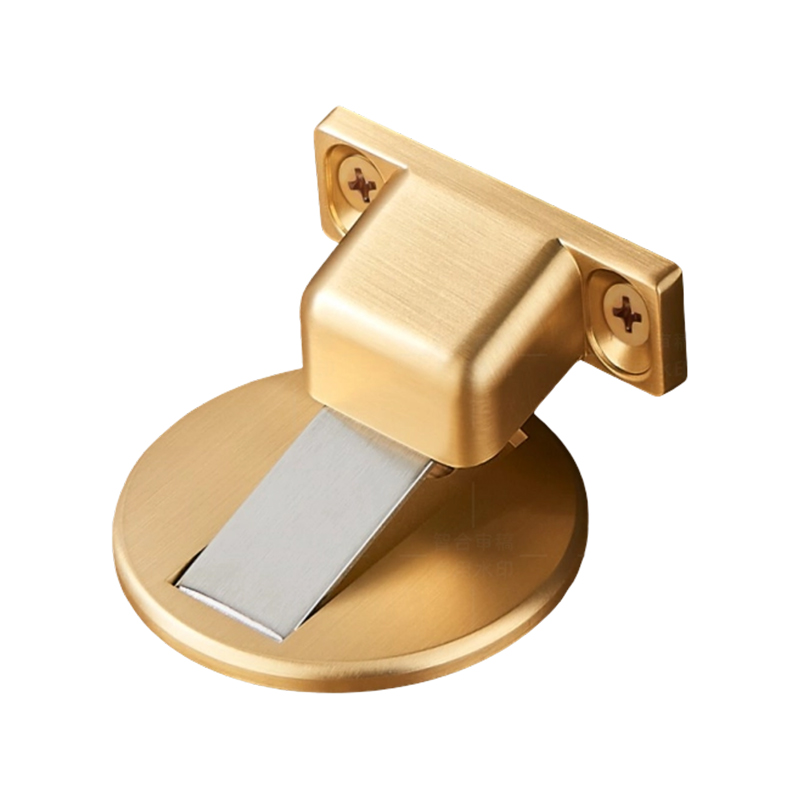
Spherical Magnetic Door Stopper: The Magnet and the Mount Decide Whether It Holds
A spherical magnetic door stopper is a small hardware item that buyers usually select on finish and price, yet the complaints it generates are almost never about appearance. They are about a stopper that slides on the floor, a magnet that loses grip after a few months, or a base that pulls loose from the wall when the door swings into it. The shape is simple; the behaviour under a moving door is not.
Holding force depends on the gap, not the magnet alone
A magnetic stopper works only when the door-mounted piece and the floor or wall-mounted piece are close enough for the field to act. Two points deserve attention:
- The gap between the two parts should be set during installation, since a gap that is slightly too wide reduces holding force more than most buyers expect;
- The magnet grade should match the door weight and swing speed, because a light interior door and a heavier fire-rated door need different holding force.
Buyers should ask how the gap is adjusted, whether the installation instructions specify a target gap, and what door weight the stopper is rated for. A stopper that holds a showroom door can fail on a heavier door in the same building.
Floor contact and sliding
A floor-mounted spherical stopper relies on friction and weight to stay in place. Buyers should check the base material, whether it has a rubber or silicone pad, and how it behaves on tile, wood, and concrete. A base that is hard and smooth slides on polished tile, while one with a soft pad grips but may mark the floor. The sphere itself should roll slightly when the door hits it, and a sphere that is fixed rather than free to rotate transfers the impact to the base and loosens it over time.
Wall mounting and pull-out strength
Wall-mounted models depend on the fixing, and pull-out is the most common failure. Buyers should ask how the base is fixed, whether the screws and plugs suit the wall type, and whether the base has a wide enough footprint to spread the load. A small base fixed into plasterboard concentrates force and pulls out after a few door swings. Adhesive mounting is convenient but depends on surface preparation, and buyers should confirm whether adhesive is recommended for the intended wall.
Finish and corrosion in real rooms
Spherical stoppers are often chosen for appearance, so the finish has to survive cleaning and humidity. Plated finishes can corrode at edges, and painted finishes can chip when the door hits the stopper. Buyers should ask how the finish is tested, whether it resists household cleaners, and how it behaves in bathrooms or kitchens. A stopper that looks good in a sample box can show corrosion within a season.
What to check before ordering
Rather than comparing finishes and prices, buyers can ask what door weight the stopper is rated for, how the gap is adjusted, what the base pad is made of, how the base is fixed to different wall types, and how the finish resists cleaning. Suppliers who answer with test data and installation guidance are easier to trust than those who answer with a catalogue photo. The stopper is a small item; the difference lies in whether the magnet, the base, and the fixing were matched to how doors actually move.

Copyright © 2026 by Wenzhou Boluosi Hardware Co., Ltd. Rights Reserved.
