 English
 русский
 中文简体
中文简体 Español
 عربى
عربىKnob Door Lock: The Round Handle That Turns the Latch
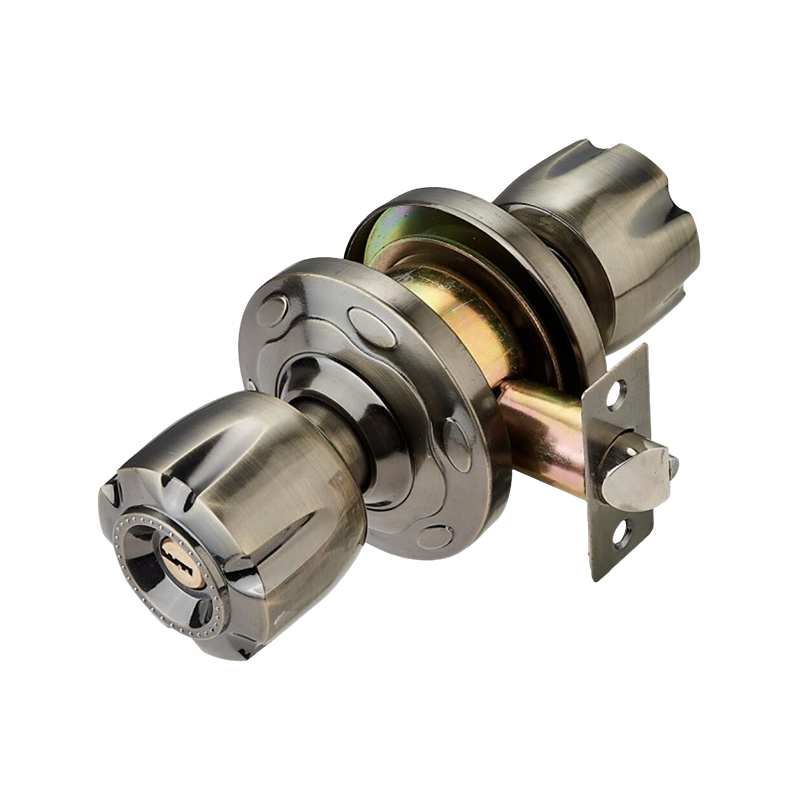
A knob door lock is the round handle that turns to open the door. Inside, the knob connects to a spindle, and the spindle retracts the latch. It is the most familiar door hardware in the world. It goes on bedrooms, bathrooms, offices, and front doors. The knob is the shape the hand expects. The lock is the mechanism behind it. For builders, property managers, and homeowners replacing old hardware, the knob lock is the standard that never really left.
Round vs. Lever
The knob is round. The lever is flat. Both turn the latch. The knob requires a grip and a twist. The lever requires a push. The knob is the older form, and in some markets the lever has replaced it for accessibility. But the knob still sells, because it is what people know.
A knob door lock fits the hand the same way it did fifty years ago. That familiarity is the selling point. The buyer replacing the old lock wants the new one to feel the same.
The Passage, the Privacy, and the Keyed
A knob lock comes in three functions. The passage lock has no locking mechanism. It just latches. It goes on the hallway or the closet. The privacy lock has a turn button on the inside and an emergency release on the outside. It goes on the bedroom and the bathroom. The keyed entry lock has the cylinder and the key. It goes on the front door or the office.
A knob door lock in the privacy function is the most common interior lock. The turn button locks the outside knob. The emergency release opens it with a pin from the hallway. The function is chosen at the factory. The buyer has to know which one the door needs.
The Backset and the Bore
The knob lock fits the door through two holes: the bore hole for the knob and the latch, and the edge bore for the latch bolt. The backset is the distance from the edge of the door to the center of the bore hole. The standard backset is 2-3/8 inches or 2-3/4 inches.
A knob door lock with the adjustable backset fits either. The latch is the part that has to match the door prep. A door already drilled for one backset cannot take a lock with the other unless the latch is adjustable.
The door thickness matters. The standard door is 1-3/8 inches or 1-3/4 inches. The knob lock has the screws that go through the door and the latch that fits the edge bore. A knob door lock made for the wrong thickness does not tighten.
Here is what a knob door lock needs to deliver:
- Passage, privacy, or keyed function
- Adjustable backset or the correct fixed backset
- Latch that fits the edge bore
- Screws for the door thickness
- Solid knob with a quality finish
- All-metal internal components
The Finish and the Wear
The knob is brass, zinc, or stainless. The finish is polished brass, satin nickel, matte black, or chrome. The finish takes the hand oils and the cleaning. A plated finish that wears through shows the base metal underneath. A quality finish holds its look.
The internal parts are the springs, the spindle, and the latch. The springs have to hold the knob return and the latch action. A cheap spring breaks and the knob droops. A quality lock with all-metal internals lasts.
The Door That Will Not Latch
The door will not latch because the strike plate and the latch do not align. The door swelled, or the frame moved, or the lock was installed wrong. The knob lock is only as good as the installation.
The knob wobbles because the set screw backed out. The key sticks because the pins wore. The turn button will not turn because the mechanism is dry. Each one is a small failure that traces back to the lock quality or the installation.
A knob door lock is the round handle that turns the latch. It is the simplest door hardware and the most familiar. Choose the function the door needs, the backset the door has, and a lock with the solid internals. The door will open and close the way it should. That is the job.

Copyright © 2026 by Wenzhou Boluosi Hardware Co., Ltd. Rights Reserved.
